
Collection
We begin with an advanced health check, collected from the comfort of your home.
Understand your body today, anticipate tomorrow, and make better decisions throughout your life. Reservation only.
Understand your body today, anticipate tomorrow, and make better decisions throughout your life.
Reservation only.
Every person's biology is unique
Genetics, biomarkers, lifestyle, environment, and daily health signals into one personalized health profile. Understand what your body needs, how it is changing, and which actions can create the biggest impact.
Core Biology
Genetics & Aging
Metabolism

Partners: MGI, Oxford Nanopore, Masdar City, Dubai International Financial Centre, Roche, Microsoft Azure






Every person's biology is unique
It starts with an advanced health check then so much more...
We begin with an advanced health check, collected from the comfort of your home.

Your biology is translated into clear insights across blood, genetics, metabolism, and more.

Your plan is personalized to help improve energy, recovery, sleep, and long-term health.

Your Digital Twin evolves over time, tracking progress as your body changes.
Fastest turnaround




Private by design
Federated learning, private by design. Your health data stays protected while your Digital Twin learns from patterns, not exposure. Genetics, biomarkers, lifestyle, environment, and wearable signals are processed with privacy-first architecture, giving you intelligence without compromising ownership.
Insights you can understand
Your lab results are translated from complex numbers into clear, human explanations. Each biomarker is shown with what it means, why it matters, how it relates to your personal baseline, and what actions may help improve it over time. No confusion, no medical jargon — just your biology explained simply.
Make your biology visible
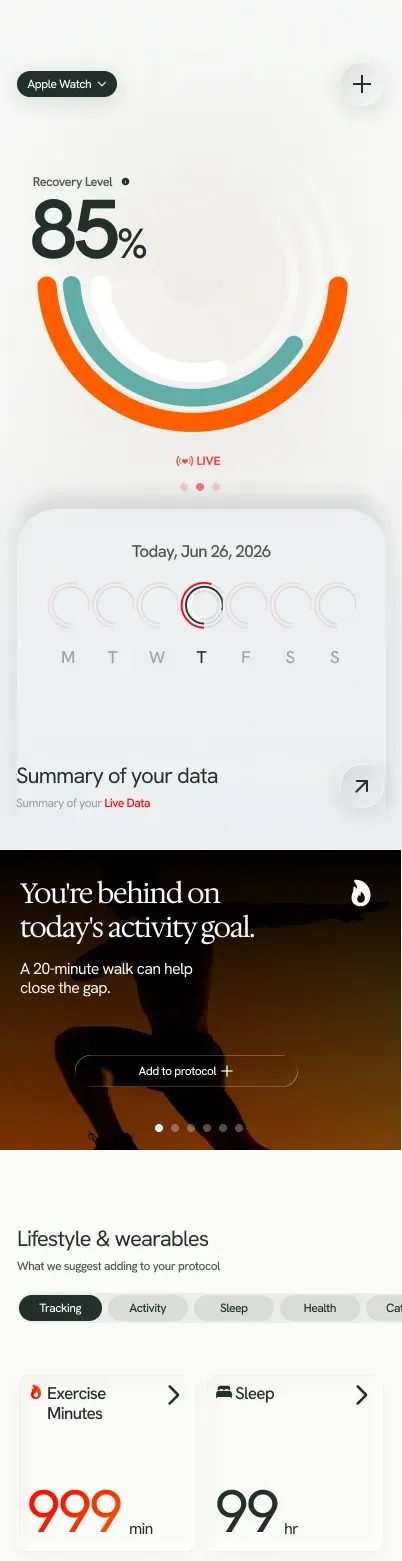
Wearables that make your biology visible. Connect your wearable data to see sleep, strain, recovery, heart rate, and daily signals in one place. Your Twin turns fragmented health metrics into a clear, didactic view of what is happening inside your body today.
Protocols built around you
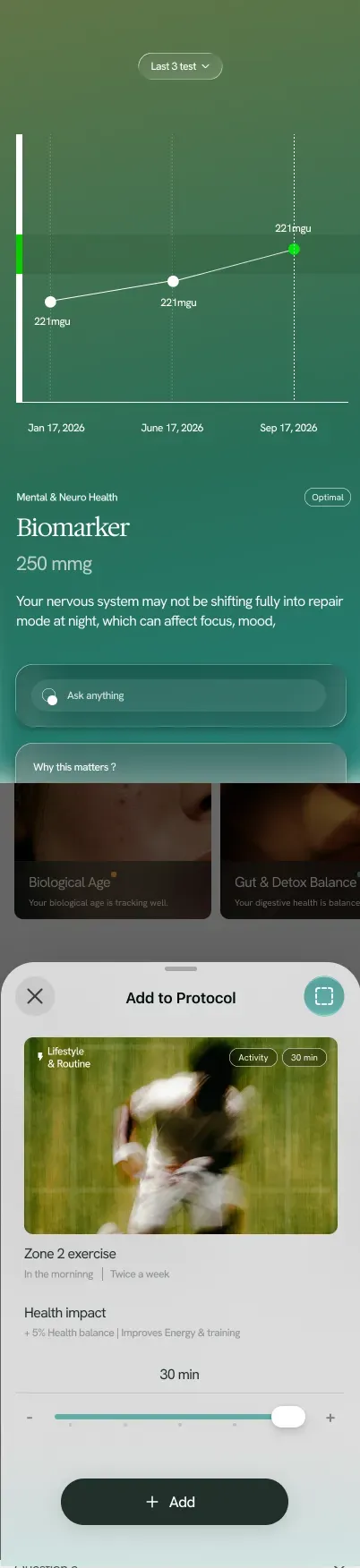
Protocols built around your biology. Your data becomes personalized recommendations across supplements, lifestyle, training, recovery, nutrition, and clinical follow-up. Every protocol is designed to help you understand what to improve, why it matters, and what action to take next.
A curated ecosystem for optimization
Access trusted products, services, tests, wearables, protocols, and partner solutions directly from your Digital Twin. The marketplace connects insight to action, helping you move from knowing your biology to improving it.
What you will get



Axiom Full body map
Multi-omics diagnostics
Digital infrastructure
Member experience
Your biomarkers are more than just numbers. They give you a glimpse into how well your body is operating. Explore what's measured in our biomarker blood tests so you can select the panels that are best for you.
No clinic. No fasting in a waiting room. A single morning at home sets your entire biology in motion.
Join GenetiQWhole genome sequencing reads essentially all of your DNA in one test. It is used to flag inherited disease risks, carrier status you could pass to children, and gene variants that shape how you respond to medicines, and it underpins many of the other genetic insights in your report.
Possible conditions
Sample: Blood · In every Axiom
Pharmacogenomics reads the genes that control how your body activates and clears common medicines. It helps predict which drugs are likely to work well, which may not, and which could cause side effects, so prescribing can be tailored to you and lean less on trial-and-error.
Possible conditions
Sample: Blood · In every Axiom
G6PD is an enzyme that protects red blood cells from stress. An inherited deficiency is common in some regions and usually silent, until certain foods, infections or medicines trigger red-cell breakdown, which is why it is checked before some treatments.
What a high result can mean
Not typically relevant.
What a low result can mean
G6PD deficiency, with a risk of red-cell breakdown from certain triggers.
Possible conditions
Possible symptoms
Sample: Blood · In every Axiom
ApoE4 is an inherited version of the APOE gene, which helps carry fats and cholesterol around the blood and brain. Carrying one or two copies of the E4 variant is the strongest common genetic risk factor for late-onset Alzheimer's disease and can also influence cholesterol and heart-disease risk. Many carriers never develop Alzheimer's, so it points to a raised risk you can act on early.
Possible conditions
Sample: Blood · In every Axiom
Total cholesterol is the overall amount of cholesterol in your blood, combining the harmful and protective types. It's a useful first look at heart risk, though the breakdown into LDL, HDL and particle counts tells the fuller story.
What a high result can mean
Raised cardiovascular risk, often from diet, genetics or metabolic factors.
What a low result can mean
Usually not a concern; very low levels are occasionally seen with liver or thyroid issues.
Possible conditions
Sample: Blood · In every Axiom
LDL carries cholesterol into your artery walls, where it can build up as plaque. It's the main cholesterol target for lowering heart-attack and stroke risk, so a high level is one of the most actionable numbers in a lipid panel.
What a high result can mean
Higher risk of plaque build-up, heart attack and stroke.
What a low result can mean
Generally protective for the heart.
Possible conditions
Sample: Blood · In every Axiom
HDL is the 'good' cholesterol that helps clear excess fat from your arteries and carry it back to the liver. Higher levels are generally protective, while low HDL is a common marker of increased cardiovascular and metabolic risk.
What a high result can mean
Generally protective against heart disease.
What a low result can mean
Higher cardiovascular risk, often linked to inactivity or metabolic issues.
Possible conditions
Sample: Blood · In every Axiom
Triglycerides are the main fat in your blood, rising with excess sugar, refined carbs, alcohol and calories. High levels are linked to insulin resistance and heart risk, and very high levels can inflame the pancreas.
What a high result can mean
Insulin resistance, excess carbs/alcohol, or raised heart and pancreas risk.
What a low result can mean
Usually not a concern.
Possible conditions
Sample: Blood · In every Axiom
Every artery-clogging cholesterol particle carries exactly one ApoB protein, so ApoB is a direct count of the harmful particles driving heart disease. Many experts consider it a more accurate predictor of cardiovascular risk than LDL cholesterol alone.
What a high result can mean
A high number of atherogenic particles, a strong predictor of heart risk.
What a low result can mean
Fewer harmful particles; lower cardiovascular risk.
Possible conditions
Sample: Blood · In every Axiom
ApoA1 is the main protein in protective HDL particles and drives the process that clears cholesterol from your arteries. Higher levels generally reflect stronger cardiovascular protection, so a low ApoA1 can signal increased heart risk.
What a high result can mean
Generally protective for the heart.
What a low result can mean
Reduced cardiovascular protection.
Possible conditions
Sample: Blood · In every Axiom
Lipoprotein(a) is an inherited, largely fixed cholesterol particle that most people never have measured. A high level independently raises the risk of early heart disease, stroke and narrowed aortic valves, and it is worth knowing once, since it barely changes through life.
What a high result can mean
Inherited higher risk of early heart disease, stroke and aortic valve disease.
What a low result can mean
No added inherited cardiovascular risk from this particle.
Possible conditions
Sample: Blood · In every Axiom
hs-CRP detects low-grade inflammation deep in the body, including in artery walls. Because hidden inflammation quietly drives heart disease and many chronic conditions, a raised hs-CRP is an early warning even when you feel well.
What a high result can mean
Inflammation from infection, injury, chronic disease, or raised cardiovascular risk.
What a low result can mean
Low inflammation, generally reassuring.
Possible conditions
Possible symptoms
Sample: Blood · In every Axiom
NT-proBNP is released when the heart's chambers are stretched and working too hard. It's a key marker for detecting and monitoring heart failure, rising before many symptoms become obvious.
What a high result can mean
The heart is under strain, a marker of heart failure or fluid overload.
What a low result can mean
Heart-wall strain unlikely; reassuring.
Possible conditions
Possible symptoms
Sample: Blood · In every Axiom
Troponin T is released when heart-muscle cells are injured. The high-sensitivity test can pick up tiny amounts, making it the key marker for heart attacks and, at low levels, a subtle signal of ongoing heart strain.
What a high result can mean
Heart-muscle injury or strain, and acutely a possible heart attack.
What a low result can mean
No detectable heart-muscle injury; reassuring.
Possible conditions
Possible symptoms
Sample: Blood · In every Axiom
CK-MB is a form of creatine kinase concentrated in heart muscle. A rise suggests injury to the heart specifically, so it's used alongside troponin to assess heart-muscle damage.
What a high result can mean
Possible heart-muscle injury (used with troponin).
What a low result can mean
No heart-muscle injury detected.
Possible conditions
Possible symptoms
Sample: Blood · In every Axiom
Non-HDL cholesterol is all the cholesterol carried by artery-clogging particles, meaning everything except protective HDL. Worked out from total and HDL cholesterol, it captures your full atherogenic burden in a single number and is a strong predictor of heart risk.
What a high result can mean
Higher burden of artery-clogging cholesterol; raised heart risk.
What a low result can mean
Lower atherogenic burden.
Possible conditions
Sample: Blood (derived) · In every Axiom
This ratio compares your total cholesterol with your protective HDL, giving a quick snapshot of the balance between harmful and helpful cholesterol. A lower ratio generally means lower cardiovascular risk.
What a high result can mean
Unfavourable balance, with higher cardiovascular risk.
What a low result can mean
Favourable balance, with lower cardiovascular risk.
Possible conditions
Sample: Blood (derived) · In every Axiom
This ratio weighs harmful LDL against protective HDL cholesterol. It's a simple way to summarise the direction of your cholesterol balance, with lower ratios linked to lower heart risk.
What a high result can mean
More harmful relative to protective cholesterol; higher risk.
What a low result can mean
Favourable cholesterol balance.
Possible conditions
Sample: Blood (derived) · In every Axiom
This ratio is a simple, powerful signal of insulin resistance and of small, dense cholesterol particles. A high triglyceride-to-HDL ratio often points to metabolic trouble before blood sugar itself looks abnormal.
What a high result can mean
Likely insulin resistance and small dense LDL, pointing to metabolic risk.
What a low result can mean
Favourable metabolic profile.
Possible conditions
Sample: Blood (derived) · In every Axiom
This shows what share of your total cholesterol is carried by artery-clogging particles, with the rest in protective HDL. A higher share reflects a more atherogenic profile.
What a high result can mean
A greater share of harmful cholesterol; higher risk.
What a low result can mean
A greater share of protective cholesterol.
Possible conditions
Sample: Blood (derived) · In every Axiom
Creatine kinase is an enzyme released when muscle is strained or damaged. It rises after intense exercise or injury, and persistently high levels can point to muscle disorders or a side effect of some medications such as statins.
What a high result can mean
Muscle strain, injury, intense exercise, or a muscle/medication effect.
What a low result can mean
Usually not significant.
Possible conditions
Possible symptoms
Sample: Blood · In every Axiom
Homocysteine is an amino acid that builds up when B-vitamins (B12, folate, B6) are low. Raised levels are linked to higher risk of heart disease, stroke and cognitive decline, and often improve with B-vitamin correction.
What a high result can mean
Low B-vitamins, and raised cardiovascular and cognitive risk.
What a low result can mean
Generally favourable.
Possible conditions
Possible symptoms
Sample: Blood · In every Axiom
GDF-15 is a protein cells release when they are under stress from inflammation, low oxygen or injury. Because this stress response builds up with age and disease, higher levels are associated with heart, kidney and metabolic problems, and with the general wear-and-tear of biological ageing.
What a high result can mean
Cellular stress linked to heart, kidney or metabolic disease, or advancing biological age.
Possible conditions
Possible symptoms
Sample: Blood · In every Axiom
Fasting glucose is your blood sugar after an overnight fast, a core check of how well your body controls blood sugar. Raised levels are the classic early sign of prediabetes and diabetes.
What a high result can mean
Impaired blood-sugar control, seen in prediabetes or diabetes.
What a low result can mean
Low blood sugar (hypoglycaemia), which can cause shakiness and confusion.
Possible conditions
Possible symptoms
Sample: Blood · In every Axiom
Fasting insulin shows how hard your pancreas is working to keep blood sugar normal. It often rises years before glucose does, making it an early window into insulin resistance and metabolic health.
What a high result can mean
Insulin resistance, where the body needs more insulin to control sugar.
What a low result can mean
Low insulin output (can occur in type 1 diabetes).
Possible conditions
Possible symptoms
Sample: Blood · In every Axiom
HbA1c reflects your average blood sugar over the past two to three months by measuring how much sugar is stuck to your red blood cells. It's the standard test for diagnosing and monitoring diabetes.
What a high result can mean
Higher average blood sugar, seen in prediabetes or diabetes.
What a low result can mean
Low average blood sugar; occasionally reflects anaemia or red-cell turnover.
Possible conditions
Possible symptoms
Sample: Blood · In every Axiom
HOMA-IR combines your fasting glucose and insulin into a single score of how well your body responds to insulin. A higher score points to insulin resistance, a root driver of type 2 diabetes and metabolic disease, often long before blood sugar rises.
What a high result can mean
Greater insulin resistance.
What a low result can mean
Good insulin sensitivity.
Possible conditions
Possible symptoms
Sample: Blood (derived) · In every Axiom
C-peptide is released alongside insulin, so it shows how much insulin your own pancreas is actually making. It helps distinguish type 1 from type 2 diabetes and gauge remaining pancreatic function.
What a high result can mean
High insulin production, often with insulin resistance.
What a low result can mean
Low insulin production (as in type 1 diabetes).
Possible conditions
Sample: Blood · In every Axiom
Fructosamine reflects your average blood sugar over the past two to three weeks, a shorter window than HbA1c. It is useful when recent changes matter or when conditions affecting red blood cells make HbA1c less reliable.
What a high result can mean
Raised recent average blood sugar.
What a low result can mean
Low recent average blood sugar, or low protein states.
Possible conditions
Sample: Blood · In every Axiom
IGF-1 is a growth and repair hormone driven largely by growth hormone from the pituitary. It reflects growth-hormone activity and metabolic health; abnormal levels can signal pituitary disorders and are also studied in ageing and longevity.
What a high result can mean
Excess growth hormone (e.g. acromegaly).
What a low result can mean
Low growth-hormone activity, or poor nutrition/liver function.
Possible conditions
Possible symptoms
Sample: Blood · In every Axiom
Uric acid is a waste product from breaking down purines in food and cells. When it builds up it can crystallise in joints to cause gout, form kidney stones, and it's increasingly linked to high blood pressure and metabolic risk.
What a high result can mean
Raised risk of gout, kidney stones and metabolic issues.
What a low result can mean
Usually not a concern.
Possible conditions
Possible symptoms
Sample: Blood · In every Axiom
Triglycerides are the main fat in your blood, rising with excess sugar, refined carbs, alcohol and calories. High levels are linked to insulin resistance and heart risk, and very high levels can inflame the pancreas.
What a high result can mean
Insulin resistance, excess carbs/alcohol, or raised heart and pancreas risk.
What a low result can mean
Usually not a concern.
Possible conditions
Sample: Blood · In every Axiom
This ratio is a simple, powerful signal of insulin resistance and of small, dense cholesterol particles. A high triglyceride-to-HDL ratio often points to metabolic trouble before blood sugar itself looks abnormal.
What a high result can mean
Likely insulin resistance and small dense LDL, pointing to metabolic risk.
What a low result can mean
Favourable metabolic profile.
Possible conditions
Sample: Blood (derived) · In every Axiom
Lactate is produced when cells make energy with limited oxygen. A raised level can signal that tissues are not getting enough oxygen or that the mitochondria, your cellular power plants, are under stress.
What a high result can mean
Reduced oxygen delivery or mitochondrial stress; after intense exercise it's normal.
What a low result can mean
Not typically significant.
Possible conditions
Possible symptoms
Sample: Blood · In every Axiom
Creatinine is a waste product from normal muscle activity that your kidneys filter out. Because healthy kidneys keep it low, a rising creatinine is a core signal that kidney filtering is slowing down.
What a high result can mean
Reduced kidney function, or dehydration.
What a low result can mean
Often just low muscle mass; rarely a concern.
Possible conditions
Possible symptoms
Sample: Blood · In every Axiom
Urea is a waste product from breaking down protein, cleared by the kidneys. It reflects kidney function but also shifts with hydration and protein intake, so it's read alongside creatinine.
What a high result can mean
Reduced kidney function, dehydration, or a high-protein state.
What a low result can mean
Low protein intake or liver issues.
Possible conditions
Possible symptoms
Sample: Blood · In every Axiom
Cystatin C is a protein produced steadily by all cells and filtered by the kidneys, making it a precise measure of kidney filtering that holds up across differences in muscle mass, age and diet that can skew creatinine.
What a high result can mean
Reduced kidney filtering function.
What a low result can mean
Generally reassuring.
Possible conditions
Possible symptoms
Sample: Blood · In every Axiom
eGFR estimates how much blood your kidneys filter each minute, the standard measure of overall kidney function. A falling eGFR is used to detect and stage chronic kidney disease.
What a high result can mean
Normal or high filtering, generally reassuring.
What a low result can mean
Reduced kidney function; low values indicate chronic kidney disease.
Possible conditions
Possible symptoms
Sample: Blood (derived) · In every Axiom
Electrolytes are the charged minerals (sodium, potassium, chloride and bicarbonate) that keep your fluids balanced and your nerves, muscles and heart working. Imbalances can stem from the kidneys, hydration, hormones or medications and can affect heart rhythm.
What a high result can mean
Imbalance from dehydration, kidney, hormonal or medication effects.
What a low result can mean
Imbalance from fluid loss, kidney or hormonal causes.
Possible conditions
Possible symptoms
Sample: Blood · In every Axiom
Urine chemistry checks how your kidneys handle protein, minerals and waste by measuring what leaks into your urine. Protein in the urine is an early warning of kidney damage, often before blood tests change.
What a high result can mean
Protein or other markers in urine can signal kidney stress or damage.
What a low result can mean
Generally reassuring.
Possible conditions
Possible symptoms
Sample: Urine · In every Axiom
The anion gap is a calculated check on the acid-base balance of your blood. A high gap points to a build-up of acids, as in poorly controlled diabetes or kidney problems, and helps pinpoint the cause of metabolic disturbances.
What a high result can mean
Acid build-up (metabolic acidosis), for example from kidney issues or diabetic ketoacidosis.
What a low result can mean
Uncommon; usually not significant.
Possible conditions
Sample: Blood (derived) · In every Axiom
This ratio helps show whether a raised urea comes from the kidneys themselves or from causes outside them, such as dehydration, a high-protein state or gut bleeding, helping target the right next step.
What a high result can mean
Often dehydration, a high-protein state, or gut bleeding.
What a low result can mean
Can reflect low protein intake or liver disease.
Possible conditions
Sample: Blood (derived) · In every Axiom
Uric acid is a waste product from breaking down purines in food and cells. When it builds up it can crystallise in joints to cause gout, form kidney stones, and it's increasingly linked to high blood pressure and metabolic risk.
What a high result can mean
Raised risk of gout, kidney stones and metabolic issues.
What a low result can mean
Usually not a concern.
Possible conditions
Possible symptoms
Sample: Blood · In every Axiom
Albumin is the main protein your liver makes; it keeps fluid inside blood vessels and carries hormones and nutrients. Low levels can reflect liver disease, kidney loss, poor nutrition or ongoing inflammation.
What a high result can mean
Usually just dehydration.
What a low result can mean
Liver disease, kidney loss, malnutrition, or chronic inflammation.
Possible conditions
Possible symptoms
Sample: Blood · In every Axiom
Calcium is essential for strong bones and for nerve and muscle signalling. Your body keeps blood calcium in a tight range using hormones and vitamin D, so an abnormal level usually points to a parathyroid, vitamin D, kidney or, rarely, a cancer-related cause.
What a high result can mean
Overactive parathyroid, certain cancers, or excess vitamin D.
What a low result can mean
Vitamin D deficiency, low parathyroid activity, or kidney disease.
Possible conditions
Possible symptoms
Sample: Blood · In every Axiom
Phosphate works with calcium to build bone and is central to energy production in every cell. Levels are controlled by the kidneys and hormones, so an abnormal result often points to kidney, bone or nutritional causes.
What a high result can mean
Often reduced kidney function.
What a low result can mean
Malnutrition, refeeding, or certain hormonal conditions.
Possible conditions
Possible symptoms
Sample: Blood · In every Axiom
Aldosterone is an adrenal hormone that controls sodium, potassium and blood pressure by acting on the kidneys. Excess aldosterone is an important and treatable cause of high blood pressure that standard checks can miss.
What a high result can mean
Primary aldosteronism, a treatable cause of high blood pressure.
What a low result can mean
Adrenal insufficiency; low blood pressure.
Possible conditions
Possible symptoms
Sample: Blood · In every Axiom
Alanine aminotransferase (ALT) is an enzyme concentrated inside liver cells. When those cells are stressed or damaged they leak ALT into the blood, so a raised level is one of the most specific everyday signals of liver injury.
What a high result can mean
Liver-cell damage from fatty liver (MASLD), viral or alcohol-related hepatitis, or a medication effect.
What a low result can mean
Rarely significant.
Possible conditions
Possible symptoms
Sample: Blood · In every Axiom
Aspartate aminotransferase (AST) is an enzyme found in the liver but also in muscle and the heart. Alongside ALT it helps assess liver health, and the pattern between the two hints at the cause of any liver stress.
What a high result can mean
Liver stress or damage; can also rise with muscle injury.
What a low result can mean
Not usually significant.
Possible conditions
Possible symptoms
Sample: Blood · In every Axiom
Alkaline phosphatase is an enzyme found mainly in the liver's bile system and in bone. A raised level points to a blockage in bile flow or to increased bone activity, so it's interpreted alongside other liver and bone markers.
What a high result can mean
Bile-flow blockage, liver disease, or increased bone turnover.
What a low result can mean
Uncommon; can reflect low zinc or nutrition.
Possible conditions
Possible symptoms
Sample: Blood · In every Axiom
GGT is a liver enzyme especially sensitive to alcohol, medications and bile-flow problems. It's often used to work out whether a raised ALP is coming from the liver, and as a marker of alcohol-related liver stress.
What a high result can mean
Alcohol, medication load, fatty liver, or bile-duct problems.
What a low result can mean
Not significant.
Possible conditions
Possible symptoms
Sample: Blood · In every Axiom
Bilirubin is a yellow pigment made when old red blood cells break down; the liver processes it for removal. High levels cause jaundice and can reflect liver disease, bile-duct blockage, or faster red-cell breakdown.
What a high result can mean
Liver disease, bile-duct blockage, faster red-cell breakdown, or harmless Gilbert's syndrome.
What a low result can mean
Not significant.
Possible conditions
Possible symptoms
Sample: Blood · In every Axiom
Albumin is the main protein your liver makes; it keeps fluid inside blood vessels and carries hormones and nutrients. Low levels can reflect liver disease, kidney loss, poor nutrition or ongoing inflammation.
What a high result can mean
Usually just dehydration.
What a low result can mean
Liver disease, kidney loss, malnutrition, or chronic inflammation.
Possible conditions
Possible symptoms
Sample: Blood · In every Axiom
Total protein measures albumin plus the antibody-rich globulins together, giving a broad view of nutrition, liver function and immune activity. Abnormal levels prompt a closer look at which protein fraction is responsible.
What a high result can mean
Chronic inflammation, infection, or certain immune conditions.
What a low result can mean
Liver disease, kidney loss, or malnutrition.
Possible conditions
Sample: Blood · In every Axiom
Ammonia is a toxic by-product of protein breakdown that a healthy liver quickly converts for removal. When the liver is failing, ammonia builds up and can affect the brain, causing confusion and drowsiness.
What a high result can mean
Impaired liver clearance, which can cause brain effects (encephalopathy).
What a low result can mean
Not significant.
Possible conditions
Possible symptoms
Sample: Blood · In every Axiom
PRO-C3 is a marker of active scar-tissue formation (fibrosis), released as new type-III collagen is laid down in the liver. It reflects active, ongoing scarring, helping assess how fatty-liver disease is progressing.
What a high result can mean
Active liver scarring (fibrogenesis), seen in more advanced fatty-liver disease.
What a low result can mean
Little active fibrosis.
Possible conditions
Possible symptoms
Sample: Blood · In every Axiom
Amylase and lipase are enzymes the pancreas releases to digest food. When the pancreas is inflamed or injured they spill into the blood, so a sharp rise, especially in lipase, is the key signal of pancreatitis.
What a high result can mean
Pancreatic inflammation or injury (pancreatitis).
What a low result can mean
Rarely significant.
Possible conditions
Possible symptoms
Sample: Blood · In every Axiom
Globulins are the antibody-rich protein fraction of your blood, worked out from total protein minus albumin. They reflect immune activity, so raised levels can signal chronic infection, inflammation or immune conditions, while low levels can mean weaker immune defences.
What a high result can mean
Chronic infection, inflammation, or immune/liver conditions.
What a low result can mean
Reduced antibody production; possible immune deficiency.
Possible conditions
Sample: Blood (derived) · In every Axiom
This ratio compares your liver's main protein (albumin) with your antibody proteins (globulins). A low ratio can flag chronic inflammation, infection, liver disease or immune conditions, prompting a closer look.
What a high result can mean
Can reflect low antibody levels.
What a low result can mean
Chronic inflammation, infection, liver or immune conditions.
Possible conditions
Sample: Blood (derived) · In every Axiom
The pattern between your two main liver enzymes points to the likely cause of liver stress. A ratio above two suggests alcohol-related injury or advanced scarring, while a ratio below one is more typical of fatty-liver disease.
What a high result can mean
A high ratio suggests alcohol-related injury or cirrhosis.
What a low result can mean
A low ratio is more typical of fatty-liver disease.
Possible conditions
Sample: Blood (derived) · In every Axiom
Calcium is essential for strong bones and for nerve and muscle signalling. Your body keeps blood calcium in a tight range using hormones and vitamin D, so an abnormal level usually points to a parathyroid, vitamin D, kidney or, rarely, a cancer-related cause.
What a high result can mean
Overactive parathyroid, certain cancers, or excess vitamin D.
What a low result can mean
Vitamin D deficiency, low parathyroid activity, or kidney disease.
Possible conditions
Possible symptoms
Sample: Blood · In every Axiom
This is the main storage form of vitamin D and the best measure of your vitamin D status. Vitamin D supports bone strength, immunity and mood, and deficiency is very common, especially in darker skin and low-sunlight months.
What a high result can mean
Usually over-supplementation.
What a low result can mean
Vitamin D deficiency, affecting bones, immunity and mood.
Possible conditions
Possible symptoms
Sample: Blood · In every Axiom
This is a breakdown product of vitamin D that shows how actively your body is processing it. Compared with the storage form, it helps tell true vitamin D deficiency apart from differences in how individuals handle the vitamin.
What a high result can mean
Active vitamin D processing.
What a low result can mean
Can indicate genuine vitamin D deficiency or altered metabolism.
Possible conditions
Sample: Blood · In every Axiom
Phosphate works with calcium to build bone and is central to energy production in every cell. Levels are controlled by the kidneys and hormones, so an abnormal result often points to kidney, bone or nutritional causes.
What a high result can mean
Often reduced kidney function.
What a low result can mean
Malnutrition, refeeding, or certain hormonal conditions.
Possible conditions
Possible symptoms
Sample: Blood · In every Axiom
Magnesium powers energy production, muscle and nerve function, and steady heart rhythm, and it supports sleep. Low levels are common with poor diet, gut issues or certain medications and can quietly cause cramps, fatigue and palpitations.
What a high result can mean
Usually kidney impairment or excess supplements.
What a low result can mean
Magnesium deficiency, causing cramps, fatigue and palpitations.
Possible conditions
Possible symptoms
Sample: Blood · In every Axiom
Parathyroid hormone is the master controller of calcium, pulling it from bone and conserving it via the kidneys when blood calcium dips. Measured with calcium and vitamin D, it explains why calcium or bone density is off.
What a high result can mean
Overactive parathyroid, vitamin D deficiency, or kidney disease.
What a low result can mean
Underactive parathyroid glands.
Possible conditions
Possible symptoms
Sample: Blood · In every Axiom
P1NP is released as new bone collagen is built, making it a sensitive marker of bone formation. It's used mainly to track how well osteoporosis treatment is working, often changing within months.
What a high result can mean
Higher bone formation (or response to bone-building treatment).
What a low result can mean
Lower bone formation.
Possible conditions
Sample: Blood · In every Axiom
CTX is released when old bone is broken down, so it measures the rate of bone resorption. A high level signals rapid bone loss, and it's used to assess osteoporosis risk and monitor treatment that slows bone breakdown.
What a high result can mean
Faster bone breakdown, with higher bone-loss risk.
What a low result can mean
Slower bone breakdown (or response to treatment).
Possible conditions
Sample: Blood · In every Axiom
Because much of your calcium travels bound to the protein albumin, the measured value can mislead when albumin is abnormal. Corrected calcium adjusts for this to give a truer reading of your active calcium level.
What a high result can mean
A genuinely high calcium level once albumin is accounted for.
What a low result can mean
A genuinely low calcium level once albumin is accounted for.
Possible conditions
Sample: Blood (derived) · In every Axiom
Alkaline phosphatase is an enzyme found mainly in the liver's bile system and in bone. A raised level points to a blockage in bile flow or to increased bone activity, so it's interpreted alongside other liver and bone markers.
What a high result can mean
Bile-flow blockage, liver disease, or increased bone turnover.
What a low result can mean
Uncommon; can reflect low zinc or nutrition.
Possible conditions
Possible symptoms
Sample: Blood · In every Axiom
Albumin is the main protein your liver makes; it keeps fluid inside blood vessels and carries hormones and nutrients. Low levels can reflect liver disease, kidney loss, poor nutrition or ongoing inflammation.
What a high result can mean
Usually just dehydration.
What a low result can mean
Liver disease, kidney loss, malnutrition, or chronic inflammation.
Possible conditions
Possible symptoms
Sample: Blood · In every Axiom
Ferritin is the protein your body uses to store iron. Because it mirrors your total iron reserves, it is the earliest and most sensitive sign of iron deficiency, usually dropping well before anaemia appears, while unusually high levels can flag inflammation, liver stress or iron overload.
What a high result can mean
Inflammation or infection, liver disease, or iron overload (e.g. haemochromatosis).
What a low result can mean
Depleted iron stores, from blood loss, low dietary iron or poor absorption.
Possible conditions
Possible symptoms
Sample: Blood · In every Axiom
This measures the iron currently circulating in your blood, ready to help carry oxygen. On its own it fluctuates through the day, so it's interpreted with ferritin and iron-binding capacity to judge your true iron status.
What a high result can mean
Iron overload, or excess supplementation.
What a low result can mean
Iron deficiency.
Possible conditions
Possible symptoms
Sample: Blood · In every Axiom
These measure your blood's spare capacity to bind and transport iron. Capacity rises when iron stores are low and falls when they're high, so together with iron and ferritin they complete the picture of your iron status.
What a high result can mean
High capacity typically reflects iron deficiency.
What a low result can mean
Low capacity can reflect iron overload or inflammation.
Possible conditions
Sample: Blood · In every Axiom
sTfR rises when your cells are hungry for iron, and it stays reliable even when inflammation is present, which can distort ferritin. That makes it especially useful for spotting true iron deficiency when inflammation is also in the picture.
What a high result can mean
Increased iron demand, seen in iron deficiency.
What a low result can mean
Adequate iron supply.
Possible conditions
Possible symptoms
Sample: Blood · In every Axiom
Haptoglobin mops up haemoglobin released when red blood cells break down. When red cells are being destroyed faster than normal, haptoglobin is used up and falls, so a low level is a key clue to haemolysis.
What a high result can mean
Can rise with inflammation.
What a low result can mean
Faster red-cell breakdown (haemolysis).
Possible conditions
Possible symptoms
Sample: Blood · In every Axiom
LDH is an enzyme found in almost all cells and released when they're damaged. It's a non-specific marker of cell turnover and tissue injury, raised in conditions from red-cell breakdown to inflammation and some cancers.
What a high result can mean
Cell or tissue damage, red-cell breakdown, or high cell turnover.
What a low result can mean
Not significant.
Possible conditions
Sample: Blood · In every Axiom
G6PD is an enzyme that protects red blood cells from stress. An inherited deficiency is common in some regions and usually silent, until certain foods, infections or medicines trigger red-cell breakdown, which is why it is checked before some treatments.
What a high result can mean
Not typically relevant.
What a low result can mean
G6PD deficiency, with a risk of red-cell breakdown from certain triggers.
Possible conditions
Possible symptoms
Sample: Blood · In every Axiom
This ratio combines a marker of iron demand with a marker of iron stores to separate true iron deficiency from iron that is simply locked away by inflammation, a common diagnostic puzzle.
What a high result can mean
Points towards genuine iron deficiency.
What a low result can mean
Points towards adequate stores or inflammation-related patterns.
Possible conditions
Sample: Blood (derived) · In every Axiom
The Thomas index refines the iron picture to show how much iron is actually available for making red blood cells. It is used to classify iron deficiency, including the 'functional' type where stores look normal but iron cannot be used.
What a high result can mean
Limited iron availability for red-cell production.
What a low result can mean
Adequate iron availability.
Possible conditions
Sample: Blood (derived) · In every Axiom
Vitamin B12 is essential for healthy nerves and red blood cells. Deficiency is common, especially with plant-based diets, gut conditions or age, and can cause fatigue, tingling and memory problems that improve once it is corrected.
What a high result can mean
Usually supplements; rarely reflects liver or other conditions.
What a low result can mean
B12 deficiency, affecting nerves and blood.
Possible conditions
Possible symptoms
Sample: Blood · In every Axiom
Active B12 measures only the fraction of vitamin B12 your cells can actually use. Because it falls earlier than total B12, it can catch a developing deficiency sooner and clarify borderline results.
What a high result can mean
Adequate usable B12.
What a low result can mean
Early or true B12 deficiency (usable form is low).
Possible conditions
Possible symptoms
Sample: Blood · In every Axiom
Folate is a B-vitamin needed to make new cells and healthy red blood cells, and it's especially important before and during early pregnancy. Deficiency causes a type of anaemia and can raise homocysteine.
What a high result can mean
Usually supplements; not typically a concern.
What a low result can mean
Folate deficiency, causing anaemia and higher risk in pregnancy.
Possible conditions
Possible symptoms
Sample: Blood · In every Axiom
RBC folate reflects your longer-term folate stores, built up over the past few months. It gives a more stable picture of your folate status than a standard serum folate test, which can shift with recent meals.
What a high result can mean
Ample folate stores.
What a low result can mean
Longer-term folate deficiency.
Possible conditions
Possible symptoms
Sample: Blood · In every Axiom
Vitamin B12 is essential for healthy nerves and red blood cells. Deficiency is common, especially with plant-based diets, gut conditions or age, and can cause fatigue, tingling and memory problems that improve once it is corrected.
What a high result can mean
Usually supplements; rarely reflects liver or other conditions.
What a low result can mean
B12 deficiency, affecting nerves and blood.
Possible conditions
Possible symptoms
Sample: Blood · In every Axiom
Active B12 measures only the fraction of vitamin B12 your cells can actually use. Because it falls earlier than total B12, it can catch a developing deficiency sooner and clarify borderline results.
What a high result can mean
Adequate usable B12.
What a low result can mean
Early or true B12 deficiency (usable form is low).
Possible conditions
Possible symptoms
Sample: Blood · In every Axiom
Folate is a B-vitamin needed to make new cells and healthy red blood cells, and it's especially important before and during early pregnancy. Deficiency causes a type of anaemia and can raise homocysteine.
What a high result can mean
Usually supplements; not typically a concern.
What a low result can mean
Folate deficiency, causing anaemia and higher risk in pregnancy.
Possible conditions
Possible symptoms
Sample: Blood · In every Axiom
RBC folate reflects your longer-term folate stores, built up over the past few months. It gives a more stable picture of your folate status than a standard serum folate test, which can shift with recent meals.
What a high result can mean
Ample folate stores.
What a low result can mean
Longer-term folate deficiency.
Possible conditions
Possible symptoms
Sample: Blood · In every Axiom
Homocysteine is an amino acid that builds up when B-vitamins (B12, folate, B6) are low. Raised levels are linked to higher risk of heart disease, stroke and cognitive decline, and often improve with B-vitamin correction.
What a high result can mean
Low B-vitamins, and raised cardiovascular and cognitive risk.
What a low result can mean
Generally favourable.
Possible conditions
Possible symptoms
Sample: Blood · In every Axiom
This is the main storage form of vitamin D and the best measure of your vitamin D status. Vitamin D supports bone strength, immunity and mood, and deficiency is very common, especially in darker skin and low-sunlight months.
What a high result can mean
Usually over-supplementation.
What a low result can mean
Vitamin D deficiency, affecting bones, immunity and mood.
Possible conditions
Possible symptoms
Sample: Blood · In every Axiom
This is a breakdown product of vitamin D that shows how actively your body is processing it. Compared with the storage form, it helps tell true vitamin D deficiency apart from differences in how individuals handle the vitamin.
What a high result can mean
Active vitamin D processing.
What a low result can mean
Can indicate genuine vitamin D deficiency or altered metabolism.
Possible conditions
Sample: Blood · In every Axiom
Magnesium powers energy production, muscle and nerve function, and steady heart rhythm, and it supports sleep. Low levels are common with poor diet, gut issues or certain medications and can quietly cause cramps, fatigue and palpitations.
What a high result can mean
Usually kidney impairment or excess supplements.
What a low result can mean
Magnesium deficiency, causing cramps, fatigue and palpitations.
Possible conditions
Possible symptoms
Sample: Blood · In every Axiom
Ferritin is the protein your body uses to store iron. Because it mirrors your total iron reserves, it is the earliest and most sensitive sign of iron deficiency, usually dropping well before anaemia appears, while unusually high levels can flag inflammation, liver stress or iron overload.
What a high result can mean
Inflammation or infection, liver disease, or iron overload (e.g. haemochromatosis).
What a low result can mean
Depleted iron stores, from blood loss, low dietary iron or poor absorption.
Possible conditions
Possible symptoms
Sample: Blood · In every Axiom
This measures the iron currently circulating in your blood, ready to help carry oxygen. On its own it fluctuates through the day, so it's interpreted with ferritin and iron-binding capacity to judge your true iron status.
What a high result can mean
Iron overload, or excess supplementation.
What a low result can mean
Iron deficiency.
Possible conditions
Possible symptoms
Sample: Blood · In every Axiom
These measure your blood's spare capacity to bind and transport iron. Capacity rises when iron stores are low and falls when they're high, so together with iron and ferritin they complete the picture of your iron status.
What a high result can mean
High capacity typically reflects iron deficiency.
What a low result can mean
Low capacity can reflect iron overload or inflammation.
Possible conditions
Sample: Blood · In every Axiom
sTfR rises when your cells are hungry for iron, and it stays reliable even when inflammation is present, which can distort ferritin. That makes it especially useful for spotting true iron deficiency when inflammation is also in the picture.
What a high result can mean
Increased iron demand, seen in iron deficiency.
What a low result can mean
Adequate iron supply.
Possible conditions
Possible symptoms
Sample: Blood · In every Axiom
This ratio combines a marker of iron demand with a marker of iron stores to separate true iron deficiency from iron that is simply locked away by inflammation, a common diagnostic puzzle.
What a high result can mean
Points towards genuine iron deficiency.
What a low result can mean
Points towards adequate stores or inflammation-related patterns.
Possible conditions
Sample: Blood (derived) · In every Axiom
The Thomas index refines the iron picture to show how much iron is actually available for making red blood cells. It is used to classify iron deficiency, including the 'functional' type where stores look normal but iron cannot be used.
What a high result can mean
Limited iron availability for red-cell production.
What a low result can mean
Adequate iron availability.
Possible conditions
Sample: Blood (derived) · In every Axiom
Thyroid-stimulating hormone (TSH) is the pituitary gland's signal to the thyroid. It rises when thyroid output is too low and falls when it is too high, which makes it the single most useful first-line test of thyroid function.
What a high result can mean
An underactive thyroid (hypothyroidism), such as Hashimoto's.
What a low result can mean
An overactive thyroid (hyperthyroidism), such as Graves' disease.
Possible conditions
Possible symptoms
Sample: Blood · In every Axiom
Free T4 is the available, unbound form of the main storage thyroid hormone, which your body converts into the active hormone as needed. Measured with TSH, it helps pinpoint whether a thyroid problem lies in the thyroid or the pituitary.
What a high result can mean
Overactive thyroid (hyperthyroidism).
What a low result can mean
Underactive thyroid (hypothyroidism).
Possible conditions
Possible symptoms
Sample: Blood · In every Axiom
Free T3 is the active thyroid hormone that actually drives your metabolism at the cellular level. It can reveal an overactive thyroid early and shows how well your body converts stored T4 into the usable form.
What a high result can mean
Overactive thyroid (hyperthyroidism).
What a low result can mean
Underactive thyroid, or poor T4-to-T3 conversion.
Possible conditions
Possible symptoms
Sample: Blood · In every Axiom
Thyroid antibodies show whether your immune system is targeting your own thyroid. They confirm autoimmune thyroid disease, such as Hashimoto's or Graves', often years before thyroid hormones drift out of range, which explains fatigue when standard tests look normal.
What a high result can mean
Autoimmune thyroid disease (Hashimoto's or Graves').
What a low result can mean
Autoimmune thyroid disease unlikely.
Possible conditions
Possible symptoms
Sample: Blood · In every Axiom
This ratio shows how well your body converts stored thyroid hormone (T4) into the active form (T3). A low ratio can point to sluggish conversion even when standard thyroid tests look normal.
What a high result can mean
Efficient or heightened conversion to active hormone.
What a low result can mean
Poor conversion of T4 to active T3.
Possible conditions
Sample: Blood (derived) · In every Axiom
Oestradiol is the main and most potent oestrogen, central to the menstrual cycle, fertility and bone health in women, and also important in men. Its level shifts across the cycle and falls at menopause.
What a high result can mean
Can reflect cycle phase, certain ovarian conditions, or (in men) hormone imbalance.
What a low result can mean
Low oestrogen, from menopause, low ovarian activity or hypothalamic issues.
Possible conditions
Possible symptoms
Sample: Blood · In every Axiom
Progesterone rises in the second half of the menstrual cycle and prepares the body for pregnancy. Measured at the right time, it confirms whether ovulation happened and helps investigate irregular cycles and fertility.
What a high result can mean
Confirms ovulation, or reflects pregnancy.
What a low result can mean
Absent or weak ovulation; low levels can affect the cycle and fertility.
Possible conditions
Possible symptoms
Sample: Blood · In every Axiom
Total testosterone is the main male sex hormone, driving libido, muscle, mood and energy, and it is important in women in smaller amounts. Low levels in men and high levels in women are both common, meaningful findings.
What a high result can mean
In women, androgen excess (e.g. PCOS); in men, usually supplementation.
What a low result can mean
Low testosterone (hypogonadism), affecting energy, libido and muscle.
Possible conditions
Possible symptoms
Sample: Blood · In every Axiom
Free testosterone is the small fraction not bound to carrier proteins, the part your cells can actually use. It often gives a truer read of testosterone status than the total, especially when carrier-protein levels are abnormal.
What a high result can mean
Active androgen excess (e.g. PCOS in women).
What a low result can mean
Low usable testosterone despite a possibly normal total.
Possible conditions
Possible symptoms
Sample: Blood (derived) · In every Axiom
SHBG is the protein that carries sex hormones in the blood and controls how much is free and active. A low SHBG is a common clue to insulin resistance and PCOS, while a high SHBG can leave less active testosterone available.
What a high result can mean
Less free testosterone available; seen with high oestrogen or thyroid activity.
What a low result can mean
More free androgen; often linked to insulin resistance and PCOS.
Possible conditions
Sample: Blood · In every Axiom
Luteinising hormone from the pituitary triggers ovulation in women and testosterone production in men. Its pattern helps explain irregular cycles, fertility problems, menopause and low testosterone.
What a high result can mean
Menopause, reduced ovarian/testicular function, or PCOS pattern.
What a low result can mean
A pituitary or hypothalamic signalling problem.
Possible conditions
Possible symptoms
Sample: Blood · In every Axiom
Follicle-stimulating hormone from the pituitary drives egg development in women and sperm production in men. A rising FSH is a key sign of declining ovarian reserve and approaching menopause.
What a high result can mean
Reduced ovarian or testicular reserve; menopause.
What a low result can mean
A pituitary or hypothalamic signalling problem.
Possible conditions
Possible symptoms
Sample: Blood · In every Axiom
Prolactin is a pituitary hormone best known for enabling breast-milk production. When raised outside pregnancy or breastfeeding, it can disrupt periods, fertility and libido, and sometimes signals a benign pituitary growth.
What a high result can mean
Can disrupt periods, fertility and libido; may reflect a pituitary adenoma.
What a low result can mean
Rarely significant.
Possible conditions
Possible symptoms
Sample: Blood · In every Axiom
DHEA-S is an adrenal hormone and a building block your body converts into other sex hormones. It reflects adrenal activity and gently declines with age; unusually high levels can point to androgen excess or an adrenal source.
What a high result can mean
Adrenal androgen excess (e.g. PCOS, adrenal conditions).
What a low result can mean
Reduced adrenal output; also declines with age.
Possible conditions
Possible symptoms
Sample: Blood · In every Axiom
AMH reflects the size of your remaining egg pool, or ovarian reserve. It's widely used in fertility planning: a low level suggests fewer eggs remaining, while a high level is often seen in PCOS.
What a high result can mean
Often seen in PCOS (many small follicles).
What a low result can mean
Reduced ovarian reserve; fewer eggs remaining.
Possible conditions
Sample: Blood · In every Axiom
Androstenedione is a precursor hormone the body converts into testosterone and oestrogen. It's mainly measured to investigate androgen excess and adrenal enzyme conditions, especially in women with signs of raised male hormones.
What a high result can mean
Androgen excess, from PCOS or an adrenal enzyme condition.
What a low result can mean
Reduced adrenal or gonadal output.
Possible conditions
Possible symptoms
Sample: Blood · In every Axiom
17-hydroxyprogesterone is a steroid used mainly to screen for congenital adrenal hyperplasia, a group of inherited adrenal enzyme conditions. A raised level prompts further assessment of adrenal hormone production.
What a high result can mean
Possible congenital adrenal hyperplasia or adrenal enzyme block.
What a low result can mean
Normal adrenal enzyme activity.
Possible conditions
Possible symptoms
Sample: Blood · In every Axiom
PlGF and sFlt-1 are placental proteins whose balance reflects how well the placenta is working. Their ratio is used in pregnancy to assess and rule out pre-eclampsia, a serious blood-pressure complication.
What a high result can mean
A high sFlt-1/PlGF ratio suggests increased pre-eclampsia risk.
What a low result can mean
A low ratio helps rule out pre-eclampsia in the short term.
Possible conditions
Possible symptoms
Sample: Blood · In every Axiom
The balance between LH and FSH helps characterise hormonal patterns, particularly in PCOS, where LH is often raised relative to FSH. It's interpreted alongside the individual hormone levels.
What a high result can mean
An LH-dominant pattern often associated with PCOS.
What a low result can mean
Can reflect menopause or pituitary changes.
Possible conditions
Sample: Blood (derived) · In every Axiom
The free androgen index estimates how much of your testosterone is free and active, calculated from total testosterone and SHBG. It's especially useful in assessing androgen excess in women, such as in PCOS.
What a high result can mean
Higher active androgen levels (e.g. PCOS).
What a low result can mean
Lower active androgen levels.
Possible conditions
Possible symptoms
Sample: Blood (derived) · In every Axiom
DHEA is an adrenal hormone that acts as a counterbalance to cortisol and a precursor to sex hormones. It declines with age, and its level is used to assess adrenal function and stress resilience.
What a high result can mean
Adrenal androgen excess.
What a low result can mean
Reduced adrenal reserve; also declines naturally with age.
Possible conditions
Possible symptoms
Sample: Blood · In every Axiom
DHT is a more potent form of testosterone made in tissues like the skin, scalp and prostate. It's the main driver of male-pattern hair loss and prostate growth, so it's measured when these are being investigated.
What a high result can mean
Can drive hair loss, acne and prostate enlargement.
What a low result can mean
May reflect reduced androgen activity or 5-alpha-reductase inhibition.
Possible conditions
Possible symptoms
Sample: Blood · In every Axiom
PSA is a protein made by the prostate. Raised levels can reflect prostate enlargement, inflammation or cancer, so it is the main blood test used in prostate screening, interpreted alongside age and symptoms.
What a high result can mean
Prostate enlargement, inflammation, or possible prostate cancer.
What a low result can mean
Lower likelihood of significant prostate disease.
Possible conditions
Possible symptoms
Sample: Blood · In every Axiom
This ratio shows how much of your PSA circulates unbound. A lower free-to-total ratio is associated with higher prostate-cancer risk, so it helps refine whether a raised PSA needs further investigation.
What a high result can mean
A higher ratio leans towards benign causes.
What a low result can mean
A lower ratio raises concern for prostate cancer.
Possible conditions
Sample: Blood (derived) · In every Axiom
Oestradiol is the main and most potent oestrogen, central to the menstrual cycle, fertility and bone health in women, and also important in men. Its level shifts across the cycle and falls at menopause.
What a high result can mean
Can reflect cycle phase, certain ovarian conditions, or (in men) hormone imbalance.
What a low result can mean
Low oestrogen, from menopause, low ovarian activity or hypothalamic issues.
Possible conditions
Possible symptoms
Sample: Blood · In every Axiom
Total testosterone is the main male sex hormone, driving libido, muscle, mood and energy, and it is important in women in smaller amounts. Low levels in men and high levels in women are both common, meaningful findings.
What a high result can mean
In women, androgen excess (e.g. PCOS); in men, usually supplementation.
What a low result can mean
Low testosterone (hypogonadism), affecting energy, libido and muscle.
Possible conditions
Possible symptoms
Sample: Blood · In every Axiom
Free testosterone is the small fraction not bound to carrier proteins, the part your cells can actually use. It often gives a truer read of testosterone status than the total, especially when carrier-protein levels are abnormal.
What a high result can mean
Active androgen excess (e.g. PCOS in women).
What a low result can mean
Low usable testosterone despite a possibly normal total.
Possible conditions
Possible symptoms
Sample: Blood (derived) · In every Axiom
SHBG is the protein that carries sex hormones in the blood and controls how much is free and active. A low SHBG is a common clue to insulin resistance and PCOS, while a high SHBG can leave less active testosterone available.
What a high result can mean
Less free testosterone available; seen with high oestrogen or thyroid activity.
What a low result can mean
More free androgen; often linked to insulin resistance and PCOS.
Possible conditions
Sample: Blood · In every Axiom
Luteinising hormone from the pituitary triggers ovulation in women and testosterone production in men. Its pattern helps explain irregular cycles, fertility problems, menopause and low testosterone.
What a high result can mean
Menopause, reduced ovarian/testicular function, or PCOS pattern.
What a low result can mean
A pituitary or hypothalamic signalling problem.
Possible conditions
Possible symptoms
Sample: Blood · In every Axiom
Follicle-stimulating hormone from the pituitary drives egg development in women and sperm production in men. A rising FSH is a key sign of declining ovarian reserve and approaching menopause.
What a high result can mean
Reduced ovarian or testicular reserve; menopause.
What a low result can mean
A pituitary or hypothalamic signalling problem.
Possible conditions
Possible symptoms
Sample: Blood · In every Axiom
DHEA-S is an adrenal hormone and a building block your body converts into other sex hormones. It reflects adrenal activity and gently declines with age; unusually high levels can point to androgen excess or an adrenal source.
What a high result can mean
Adrenal androgen excess (e.g. PCOS, adrenal conditions).
What a low result can mean
Reduced adrenal output; also declines with age.
Possible conditions
Possible symptoms
Sample: Blood · In every Axiom
The free androgen index estimates how much of your testosterone is free and active, calculated from total testosterone and SHBG. It's especially useful in assessing androgen excess in women, such as in PCOS.
What a high result can mean
Higher active androgen levels (e.g. PCOS).
What a low result can mean
Lower active androgen levels.
Possible conditions
Possible symptoms
Sample: Blood (derived) · In every Axiom
DHEA is an adrenal hormone that acts as a counterbalance to cortisol and a precursor to sex hormones. It declines with age, and its level is used to assess adrenal function and stress resilience.
What a high result can mean
Adrenal androgen excess.
What a low result can mean
Reduced adrenal reserve; also declines naturally with age.
Possible conditions
Possible symptoms
Sample: Blood · In every Axiom
Cortisol is your main stress hormone, naturally high in the morning and low at night. Measuring its daily rhythm reveals how your stress-response system is working. Persistent highs or a flattened pattern are linked to chronic stress and adrenal disorders.
What a high result can mean
Chronic stress or, if very high, Cushing's syndrome.
What a low result can mean
Adrenal insufficiency (Addison's), causing fatigue and low blood pressure.
Possible conditions
Possible symptoms
Sample: Blood · In every Axiom
Cortisone is the inactive partner of cortisol; the body switches between the two to control how much active stress hormone reaches your tissues. Measured with cortisol, it reveals how this on/off regulation is working.
What a high result can mean
Reflects how the body inactivates cortisol.
What a low result can mean
Reflects a shift towards active cortisol.
Possible conditions
Sample: Blood · In every Axiom
DHEA is an adrenal hormone that acts as a counterbalance to cortisol and a precursor to sex hormones. It declines with age, and its level is used to assess adrenal function and stress resilience.
What a high result can mean
Adrenal androgen excess.
What a low result can mean
Reduced adrenal reserve; also declines naturally with age.
Possible conditions
Possible symptoms
Sample: Blood · In every Axiom
Aldosterone is an adrenal hormone that controls sodium, potassium and blood pressure by acting on the kidneys. Excess aldosterone is an important and treatable cause of high blood pressure that standard checks can miss.
What a high result can mean
Primary aldosteronism, a treatable cause of high blood pressure.
What a low result can mean
Adrenal insufficiency; low blood pressure.
Possible conditions
Possible symptoms
Sample: Blood · In every Axiom
This ratio shows how actively your body switches cortisol between its active and inactive forms, via an enzyme system that also influences blood pressure. An unusual ratio can point to specific hormonal or blood-pressure conditions.
What a high result can mean
Shift towards active cortisol; linked to some blood-pressure conditions.
What a low result can mean
Shift towards inactivation of cortisol.
Possible conditions
Sample: Blood (derived) · In every Axiom
DHEA-S is an adrenal hormone and a building block your body converts into other sex hormones. It reflects adrenal activity and gently declines with age; unusually high levels can point to androgen excess or an adrenal source.
What a high result can mean
Adrenal androgen excess (e.g. PCOS, adrenal conditions).
What a low result can mean
Reduced adrenal output; also declines with age.
Possible conditions
Possible symptoms
Sample: Blood · In every Axiom
Androstenedione is a precursor hormone the body converts into testosterone and oestrogen. It's mainly measured to investigate androgen excess and adrenal enzyme conditions, especially in women with signs of raised male hormones.
What a high result can mean
Androgen excess, from PCOS or an adrenal enzyme condition.
What a low result can mean
Reduced adrenal or gonadal output.
Possible conditions
Possible symptoms
Sample: Blood · In every Axiom
17-hydroxyprogesterone is a steroid used mainly to screen for congenital adrenal hyperplasia, a group of inherited adrenal enzyme conditions. A raised level prompts further assessment of adrenal hormone production.
What a high result can mean
Possible congenital adrenal hyperplasia or adrenal enzyme block.
What a low result can mean
Normal adrenal enzyme activity.
Possible conditions
Possible symptoms
Sample: Blood · In every Axiom
hs-CRP detects low-grade inflammation deep in the body, including in artery walls. Because hidden inflammation quietly drives heart disease and many chronic conditions, a raised hs-CRP is an early warning even when you feel well.
What a high result can mean
Inflammation from infection, injury, chronic disease, or raised cardiovascular risk.
What a low result can mean
Low inflammation, generally reassuring.
Possible conditions
Possible symptoms
Sample: Blood · In every Axiom
Interleukin-6 is a signalling protein your immune cells release to switch on inflammation. Levels climb during infection and injury and tend to creep up gradually with age, a pattern often called 'inflammaging'. Persistently high IL-6 is linked to chronic inflammatory and cardiovascular conditions.
What a high result can mean
Active inflammation or infection, or age-related chronic inflammation.
Possible conditions
Possible symptoms
Sample: Blood · In every Axiom
GDF-15 is a protein cells release when they are under stress from inflammation, low oxygen or injury. Because this stress response builds up with age and disease, higher levels are associated with heart, kidney and metabolic problems, and with the general wear-and-tear of biological ageing.
What a high result can mean
Cellular stress linked to heart, kidney or metabolic disease, or advancing biological age.
Possible conditions
Possible symptoms
Sample: Blood · In every Axiom
Immunoglobulins are the antibodies your immune system makes to recognise and fight threats. Each class has a job: IgG carries long-term immune memory, IgA guards moist surfaces like the gut and airways, IgM leads the first response to new infections, and IgE drives allergic reactions. Their pattern reveals how well your defences are working.
What a high result can mean
Chronic infection or inflammation, or an allergic tendency when IgE is raised.
What a low result can mean
Weaker immune defences and a higher chance of recurrent infections.
Possible conditions
Possible symptoms
Sample: Blood · In every Axiom
Complement proteins C3 and C4 are part of your innate immune system, a cascade that tags and destroys microbes and clears away immune debris. They can rise with acute inflammation, but low levels are usually the more telling result, often meaning the system is being used up by an active autoimmune disease such as lupus.
What a high result can mean
Acute inflammation or infection, as these proteins can rise in the short term.
What a low result can mean
An active autoimmune disease such as lupus, or an inherited deficiency.
Possible conditions
Possible symptoms
Sample: Blood · In every Axiom
Rheumatoid factor is an antibody that mistakenly targets your own tissues. It is best known as a marker of rheumatoid arthritis, though it can also appear with other autoimmune conditions, some chronic infections, and even in a minority of healthy people, so results are always read alongside symptoms.
What a high result can mean
Rheumatoid arthritis or another autoimmune condition (also seen in some healthy people).
Possible conditions
Possible symptoms
Sample: Blood · In every Axiom
Anti-CCP is an antibody that is highly specific to rheumatoid arthritis, far more so than rheumatoid factor. It can appear in the blood years before joint symptoms begin, and a positive result also tends to predict more aggressive, joint-damaging disease, which makes it valuable for early diagnosis.
What a high result can mean
Rheumatoid arthritis, a highly specific sign that is often positive before symptoms appear.
Possible conditions
Possible symptoms
Sample: Blood · In every Axiom
As cells age they can enter a worn-out state called senescence and begin leaking a mix of inflammatory proteins, known together as the senescence-associated secretory phenotype, or SASP. This panel measures several of these signals, such as IL-18, TNF-alpha, Activin A and osteopontin, to gauge how much cellular ageing and 'inflammaging' is present in your body.
What a high result can mean
A greater burden of senescent 'ageing' cells and age-related inflammation.
Possible conditions
Possible symptoms
Sample: Blood · In every Axiom
This is a broad proteomic scan that measures 1,034 proteins in a single blood sample using Olink's proximity-extension technology. In one run it maps activity across many biological pathways at once, with a strong focus on inflammation and immune function, giving a wide-angle view of what is happening in your body.
Possible conditions
Sample: Blood · In every Axiom
Globulins are the antibody-rich protein fraction of your blood, worked out from total protein minus albumin. They reflect immune activity, so raised levels can signal chronic infection, inflammation or immune conditions, while low levels can mean weaker immune defences.
What a high result can mean
Chronic infection, inflammation, or immune/liver conditions.
What a low result can mean
Reduced antibody production; possible immune deficiency.
Possible conditions
Sample: Blood (derived) · In every Axiom
This ratio compares your liver's main protein (albumin) with your antibody proteins (globulins). A low ratio can flag chronic inflammation, infection, liver disease or immune conditions, prompting a closer look.
What a high result can mean
Can reflect low antibody levels.
What a low result can mean
Chronic inflammation, infection, liver or immune conditions.
Possible conditions
Sample: Blood (derived) · In every Axiom
Thyroid antibodies show whether your immune system is targeting your own thyroid. They confirm autoimmune thyroid disease, such as Hashimoto's or Graves', often years before thyroid hormones drift out of range, which explains fatigue when standard tests look normal.
What a high result can mean
Autoimmune thyroid disease (Hashimoto's or Graves').
What a low result can mean
Autoimmune thyroid disease unlikely.
Possible conditions
Possible symptoms
Sample: Blood · In every Axiom
These antibodies show whether you have been exposed to cytomegalovirus, a very common herpes-family virus that stays dormant in the body for life after infection. Most healthy people never notice it, but lifelong CMV is thought to be one of the main forces that gradually 'age' the immune system.
What a high result can mean
Past or recent CMV infection; the virus then stays dormant for life.
What a low result can mean
No detectable antibodies, meaning no evidence of past exposure.
Possible conditions
Possible symptoms
Sample: Blood · In every Axiom
These antibodies reveal past or recent infection with Epstein-Barr virus, the very common herpes-family virus behind glandular fever (infectious mononucleosis). Almost everyone is exposed by adulthood, and looking at the different antibody types can tell a recent infection apart from one that happened long ago.
What a high result can mean
Past or recent Epstein-Barr infection, such as glandular fever.
What a low result can mean
No detectable antibodies, meaning no evidence of past exposure.
Possible conditions
Possible symptoms
Sample: Blood · In every Axiom
These antibodies indicate past exposure to herpes simplex virus. HSV-1 usually causes cold sores around the mouth, while HSV-2 is the main cause of genital herpes, though either type can affect either site. Once caught, the virus stays dormant and can reactivate, and many people carry it without ever noticing symptoms.
What a high result can mean
Past exposure to HSV-1 or HSV-2, which then stays dormant for life.
What a low result can mean
No detectable antibodies, meaning no evidence of past exposure.
Possible conditions
Possible symptoms
Sample: Blood · In every Axiom
These antibodies show whether you have previously been infected with SARS-CoV-2, the virus that causes COVID-19. By targeting the virus's nucleocapsid protein, the test can pick up a genuine past infection specifically, distinguishing it from the immunity produced by vaccination.
What a high result can mean
Evidence of a past SARS-CoV-2 (COVID-19) infection.
What a low result can mean
No detectable antibodies, meaning no sign of prior infection.
Possible conditions
Possible symptoms
Sample: Blood · In every Axiom
This brings together biological-age estimates for your major organ systems into a single map, showing which are ageing faster or slower than your calendar age. It helps focus attention on the systems where your biology suggests the most room to improve.
What a high result can mean
One or more organ systems ageing faster than your actual age.
What a low result can mean
Organ systems ageing slower than your actual age, a good sign.
Possible conditions
Sample: Blood (derived) · In every Axiom
Heart Age translates your cardiovascular markers into the age your heart and blood vessels most resemble. A heart age older than your real age flags raised cardiovascular risk that lifestyle and treatment can often improve.
What a high result can mean
Your heart is ageing faster than you are, pointing to raised cardiovascular risk.
What a low result can mean
Your heart is ageing well.
Possible conditions
Sample: Blood (derived) · In every Axiom
Kidney Age expresses your kidney-function markers as a biological age. A kidney age older than your real age can be an early nudge to protect kidney health before standard results look abnormal.
What a high result can mean
Kidneys ageing faster than you are.
What a low result can mean
Kidneys ageing well.
Possible conditions
Sample: Blood (derived) · In every Axiom
Liver Age turns your liver markers into a biological age for the organ. A liver older than your calendar age can flag early fatty-liver or metabolic stress that often responds well to lifestyle change.
What a high result can mean
Liver ageing faster than you are.
What a low result can mean
Liver ageing well.
Possible conditions
Sample: Blood (derived) · In every Axiom
Immune Age estimates how old your immune system behaves, reflecting the balance and fitness of your immune cells. An older immune age is linked to weaker defences, more inflammation and higher age-related disease risk.
What a high result can mean
An older, less resilient immune system (immunosenescence).
What a low result can mean
A younger, more resilient immune profile.
Possible conditions
Sample: Blood (derived) · In every Axiom
Metabolic Age summarises your blood-sugar, insulin and lipid markers as a single biological age for your metabolism. An older metabolic age points to insulin resistance and metabolic risk that lifestyle can often turn around.
What a high result can mean
Metabolism ageing faster than you are, pointing to metabolic risk.
What a low result can mean
A metabolically youthful profile.
Possible conditions
Sample: Blood (derived) · In every Axiom
These clocks read chemical 'methylation' marks on your DNA to estimate the biological age of specific organ systems. Because these marks respond to lifestyle over time, the clocks offer a sensitive, trackable read on how you're ageing.
What a high result can mean
Organs ageing faster than your calendar age.
What a low result can mean
Organs ageing slower than your calendar age.
Possible conditions
Sample: Blood (derived) · In every Axiom
Using thousands of blood proteins, these signatures estimate the biological age of individual organs. Because proteins change with organ stress, they provide a protein-based cross-check on how each system is ageing.
What a high result can mean
Protein patterns of faster organ ageing.
What a low result can mean
Protein patterns of slower organ ageing.
Possible conditions
Sample: Blood (derived) · In every Axiom
DunedinPACE is a DNA-methylation measure of how fast you are ageing right now, often called your 'pace of ageing'. Because it responds to change, it is one of the most useful markers for seeing whether healthy habits are working.
What a high result can mean
You are ageing faster than one biological year per calendar year.
What a low result can mean
You are ageing more slowly than one year per year, a good sign.
Possible conditions
Sample: Blood (derived) · In every Axiom
GrimAge is a DNA-methylation clock trained to predict lifespan and disease risk, drawing on smoking-related and other health signals. A GrimAge older than your real age is one of the strongest epigenetic predictors of future health risk.
What a high result can mean
A biological age above your calendar age, with higher predicted health risk.
What a low result can mean
A biological age below your calendar age, with lower predicted risk.
Possible conditions
Sample: Blood (derived) · In every Axiom
PhenoAge estimates your biological age by combining clinical health markers (and, in its DNA version, methylation patterns) into a single number. It captures how your body is functioning compared with your calendar age.
What a high result can mean
A biological age above your calendar age.
What a low result can mean
A biological age below your calendar age.
Possible conditions
Sample: Blood (derived) · In every Axiom
OMICmAge blends DNA-methylation with many blood-based biological signals into a single multi-omic age estimate. By combining several data layers, it aims to give a more complete and robust read on biological ageing.
What a high result can mean
A biological age above your calendar age.
What a low result can mean
A biological age below your calendar age.
Possible conditions
Sample: Blood (derived) · In every Axiom
SymphonyAge estimates biological age by looking at how your organ systems are ageing together, combining multiple system-level signals into an overall composite. It emphasises how your organs interact as a whole.
What a high result can mean
Overall systems ageing faster than your calendar age.
What a low result can mean
Overall systems ageing slower than your calendar age.
Possible conditions
Sample: Blood (derived) · In every Axiom
Interleukin-6 is a signalling protein your immune cells release to switch on inflammation. Levels climb during infection and injury and tend to creep up gradually with age, a pattern often called 'inflammaging'. Persistently high IL-6 is linked to chronic inflammatory and cardiovascular conditions.
What a high result can mean
Active inflammation or infection, or age-related chronic inflammation.
Possible conditions
Possible symptoms
Sample: Blood · In every Axiom
GDF-15 is a protein cells release when they are under stress from inflammation, low oxygen or injury. Because this stress response builds up with age and disease, higher levels are associated with heart, kidney and metabolic problems, and with the general wear-and-tear of biological ageing.
What a high result can mean
Cellular stress linked to heart, kidney or metabolic disease, or advancing biological age.
Possible conditions
Possible symptoms
Sample: Blood · In every Axiom
These antibodies show whether you have been exposed to cytomegalovirus, a very common herpes-family virus that stays dormant in the body for life after infection. Most healthy people never notice it, but lifelong CMV is thought to be one of the main forces that gradually 'age' the immune system.
What a high result can mean
Past or recent CMV infection; the virus then stays dormant for life.
What a low result can mean
No detectable antibodies, meaning no evidence of past exposure.
Possible conditions
Possible symptoms
Sample: Blood · In every Axiom
Lactate is produced when cells make energy with limited oxygen. A raised level can signal that tissues are not getting enough oxygen or that the mitochondria, your cellular power plants, are under stress.
What a high result can mean
Reduced oxygen delivery or mitochondrial stress; after intense exercise it's normal.
What a low result can mean
Not typically significant.
Possible conditions
Possible symptoms
Sample: Blood · In every Axiom
Pyruvate is a key fuel molecule that feeds your mitochondria to make energy. Measured with lactate, it helps reveal whether your cells' energy machinery is working normally.
What a high result can mean
Can reflect altered energy metabolism.
What a low result can mean
Not typically significant on its own.
Possible conditions
Sample: Blood · In every Axiom
This ratio is a core read on how well your cells produce energy. A high lactate-to-pyruvate ratio points towards mitochondrial dysfunction, where the cellular power plants aren't working efficiently.
What a high result can mean
Suggests mitochondrial dysfunction.
What a low result can mean
Generally reassuring for energy metabolism.
Possible conditions
Sample: Blood (derived) · In every Axiom
This counts how many copies of mitochondrial DNA your cells carry, a proxy for mitochondrial health and energy capacity. Lower copy numbers have been linked to ageing, fatigue and several chronic diseases.
What a high result can mean
Generally reflects healthy mitochondrial content.
What a low result can mean
Reduced mitochondrial capacity, linked to ageing and fatigue.
Possible conditions
Possible symptoms
Sample: Blood · In every Axiom
Acylcarnitines are molecules that shuttle fats into the mitochondria to be burned for energy. Their pattern shows how efficiently your cells use fat for fuel and can reveal inherited or acquired problems with fat metabolism.
What a high result can mean
Can indicate blocks in fat-burning or metabolic stress.
What a low result can mean
Not typically significant.
Possible conditions
Possible symptoms
Sample: Blood · In every Axiom
This reads all the microbial DNA in a stool sample to map the thousands of species living in your gut. A diverse, balanced microbiome supports digestion, immunity and metabolism, while imbalance is linked to many conditions.
What a high result can mean
Low diversity or imbalance (dysbiosis) is linked to poorer gut and metabolic health.
Possible conditions
Possible symptoms
Sample: Stool · In every Axiom
This identifies the specific strains of microbes in your gut, since different strains of the same microbe can have very different effects on health. It gives a high-resolution view of your microbiome.
Possible conditions
Possible symptoms
Sample: Stool · In every Axiom
This measures what your gut microbes can actually do, including the vitamins, short-chain fatty acids and other compounds they can produce. It captures the functional health of your microbiome.
What a high result can mean
Reduced beneficial functions (e.g. lower short-chain fatty acid production).
Possible conditions
Possible symptoms
Sample: Stool · In every Axiom
Short-chain fatty acids like butyrate are beneficial molecules your gut bacteria make from fibre. They nourish the gut lining, calm inflammation and support metabolism, so low levels can reflect an imbalanced microbiome or low-fibre diet.
What a high result can mean
Generally beneficial.
What a low result can mean
Reduced fibre fermentation, linked to gut and metabolic issues.
Possible conditions
Possible symptoms
Sample: Blood · In every Axiom
TMAO is a compound your gut bacteria make from certain foods, especially red meat and eggs. Higher levels have been linked to a greater risk of heart disease, making it a marker where gut health and cardiovascular risk meet.
What a high result can mean
Higher cardiovascular risk, influenced by diet and gut bacteria.
What a low result can mean
Generally favourable.
Possible conditions
Sample: Blood · In every Axiom
Indole metabolites are made when gut bacteria break down protein. Some support the gut barrier, while others such as indoxyl sulphate add to inflammation and kidney workload when they build up, so the balance reflects gut and kidney health.
What a high result can mean
Higher levels can add to inflammation and kidney load.
What a low result can mean
Can reflect reduced beneficial microbial activity.
Possible conditions
Sample: Blood · In every Axiom
Your gut bacteria transform bile acids into products that influence digestion, metabolism and inflammation. Their pattern reflects the interplay between your liver, gut microbes and metabolic health.
What a high result can mean
An altered bile-acid pattern linked to gut or metabolic changes.
What a low result can mean
An altered bile-acid pattern.
Possible conditions
Possible symptoms
Sample: Blood · In every Axiom
EPA and DHA are the beneficial omega-3 fats found in oily fish, important for heart, brain and eye health and for calming inflammation. Many people run low, and levels respond well to diet and supplements.
What a high result can mean
Generally protective for heart and brain.
What a low result can mean
Low omega-3 status, linked to higher heart and inflammatory risk.
Possible conditions
Possible symptoms
Sample: Blood · In every Axiom
Carotenoids are protective plant pigments such as beta-carotene, lutein and lycopene that act as antioxidants and reflect how many colourful fruits and vegetables you eat. Low levels suggest a diet light on plants.
What a high result can mean
Reflects a plant-rich, antioxidant-rich diet.
What a low result can mean
Low fruit and vegetable intake; lower antioxidant protection.
Possible conditions
Possible symptoms
Sample: Blood · In every Axiom
Polyphenol markers reflect your intake of protective plant compounds from foods like olive oil, berries, tea and nuts. They signal a diet rich in anti-inflammatory, antioxidant plant chemicals linked to healthy ageing.
What a high result can mean
Reflects a polyphenol-rich, protective diet.
What a low result can mean
Low intake of protective plant compounds.
Possible conditions
Possible symptoms
Sample: Blood · In every Axiom
Lead is a toxic metal with no safe level. It builds up from old paint, water pipes, contaminated soil or industry, and even low levels can affect the brain, blood and kidneys over time. Testing shows recent and ongoing exposure so it can be reduced.
What a high result can mean
Recent or ongoing lead exposure that warrants finding and removing the source.
Possible conditions
Possible symptoms
Sample: Blood / Urine · In every Axiom
Cadmium is a toxic metal absorbed from cigarette smoke, industrial exposure and some foods. It accumulates slowly and mainly harms the kidneys and bones. Because early build-up is silent, testing is the practical way to catch and reduce exposure.
What a high result can mean
Accumulated cadmium exposure (smoking is a common source).
Possible conditions
Possible symptoms
Sample: Blood / Urine · In every Axiom
Mercury is a toxic metal that mainly enters the body through fish and, less often, occupational exposure. It can affect the nervous system and kidneys, so testing helps identify excess intake and guide dietary or exposure changes.
What a high result can mean
Higher mercury exposure, often from frequent large-fish consumption.
Possible conditions
Possible symptoms
Sample: Blood / Urine · In every Axiom
Arsenic is a toxic metal found in some groundwater, foods and industry. 'Speciated' testing separates the harmful inorganic forms from the harmless organic type from seafood, giving a true picture of meaningful exposure and long-term health risk.
What a high result can mean
Elevated inorganic arsenic exposure worth investigating.
Possible conditions
Possible symptoms
Sample: Urine · In every Axiom
Manganese is an essential trace metal your body needs in tiny amounts, but too much, usually from industrial exposure or excess supplements, is toxic to the brain. Testing checks for harmful build-up.
What a high result can mean
Excess manganese exposure, which can affect the brain (manganism).
What a low result can mean
Rare; possible dietary insufficiency.
Possible conditions
Possible symptoms
Sample: Blood / Urine · In every Axiom
Cobalt is a trace metal that is essential as part of vitamin B12 but toxic in excess. A classic source is wear from metal-on-metal joint implants. Testing checks for harmful accumulation.
What a high result can mean
Excess cobalt exposure (e.g. from metal joint implants or industry).
Possible conditions
Possible symptoms
Sample: Blood / Urine · In every Axiom
Thallium is a rare but highly toxic heavy metal, historically used in pesticides. Exposure damages the nerves and characteristically causes hair loss, so testing is used when poisoning or environmental exposure is suspected.
What a high result can mean
Thallium exposure that needs urgent source identification.
Possible conditions
Possible symptoms
Sample: Blood / Urine · In every Axiom
Uranium is a heavy metal that can contaminate groundwater near certain geology or industry. At these levels it mainly harms the kidneys through chemical toxicity, and testing tracks environmental exposure.
What a high result can mean
Elevated environmental uranium exposure, typically via drinking water.
Possible conditions
Possible symptoms
Sample: Urine · In every Axiom
Copper is an essential mineral for making red blood cells, nerves and connective tissue, but the body keeps it in a narrow range. Too little causes anaemia and nerve problems; too much, as in Wilson's disease, damages the liver and brain.
What a high result can mean
Inflammation, or copper overload such as Wilson's disease.
What a low result can mean
Copper deficiency, which can cause anaemia and nerve problems.
Possible conditions
Possible symptoms
Sample: Blood · In every Axiom
Zinc powers hundreds of enzymes and is central to immunity, wound healing, taste and smell. Low levels are common with poor diet, gut conditions or high demand, and can quietly weaken your immune system and slow healing.
What a high result can mean
Usually over-supplementation.
What a low result can mean
Zinc deficiency affecting immunity, healing, taste and skin.
Possible conditions
Possible symptoms
Sample: Blood · In every Axiom
PFAS are long-lasting industrial chemicals used in non-stick, waterproof and stain-resistant products. They build up in the body over years and have been linked to raised cholesterol, thyroid and immune effects, and some cancers. Testing shows your accumulated burden.
What a high result can mean
Higher accumulated exposure to 'forever chemicals'.
Possible conditions
Sample: Blood · In every Axiom
POPs are long-lived pollutants such as PCBs and DDT breakdown products that resist breaking down and accumulate in body fat. Long-term exposure is linked to hormone disruption, metabolic problems and certain cancers, so testing gauges your stored burden.
What a high result can mean
Higher long-term accumulated exposure.
Possible conditions
Sample: Blood · In every Axiom
BPA is a chemical from hard plastics and food-can linings that mimics oestrogen in the body. It clears quickly, so a urine test reflects recent exposure; ongoing high levels are linked to hormone disruption and metabolic effects.
What a high result can mean
Recent BPA exposure, commonly from plastic food and drink packaging.
Possible conditions
Sample: Urine · In every Axiom
DEHP is a phthalate used to soften plastics, found in packaging, medical tubing and many consumer goods. Measured as its urinary breakdown product, it reflects recent exposure and is linked to hormone and reproductive effects.
What a high result can mean
Recent phthalate exposure from plastics.
Possible conditions
Sample: Urine · In every Axiom
These antibodies show whether you have been exposed to cytomegalovirus, a very common herpes-family virus that stays dormant in the body for life after infection. Most healthy people never notice it, but lifelong CMV is thought to be one of the main forces that gradually 'age' the immune system.
What a high result can mean
Past or recent CMV infection; the virus then stays dormant for life.
What a low result can mean
No detectable antibodies, meaning no evidence of past exposure.
Possible conditions
Possible symptoms
Sample: Blood · In every Axiom
These antibodies reveal past or recent infection with Epstein-Barr virus, the very common herpes-family virus behind glandular fever (infectious mononucleosis). Almost everyone is exposed by adulthood, and looking at the different antibody types can tell a recent infection apart from one that happened long ago.
What a high result can mean
Past or recent Epstein-Barr infection, such as glandular fever.
What a low result can mean
No detectable antibodies, meaning no evidence of past exposure.
Possible conditions
Possible symptoms
Sample: Blood · In every Axiom
These antibodies indicate past exposure to herpes simplex virus. HSV-1 usually causes cold sores around the mouth, while HSV-2 is the main cause of genital herpes, though either type can affect either site. Once caught, the virus stays dormant and can reactivate, and many people carry it without ever noticing symptoms.
What a high result can mean
Past exposure to HSV-1 or HSV-2, which then stays dormant for life.
What a low result can mean
No detectable antibodies, meaning no evidence of past exposure.
Possible conditions
Possible symptoms
Sample: Blood · In every Axiom
These antibodies show whether you have previously been infected with SARS-CoV-2, the virus that causes COVID-19. By targeting the virus's nucleocapsid protein, the test can pick up a genuine past infection specifically, distinguishing it from the immunity produced by vaccination.
What a high result can mean
Evidence of a past SARS-CoV-2 (COVID-19) infection.
What a low result can mean
No detectable antibodies, meaning no sign of prior infection.
Possible conditions
Possible symptoms
Sample: Blood · In every Axiom
pTau217 is a form of the tau protein that becomes chemically tagged early in Alzheimer's disease. Measured from a simple blood draw, it closely mirrors the amyloid build-up seen in the brain and can turn abnormal years before memory symptoms appear, making it one of the most promising early signals of Alzheimer's-type changes.
What a high result can mean
Amyloid-related, Alzheimer's-type changes in the brain, sometimes before symptoms.
What a low result can mean
Low levels make underlying Alzheimer's-type changes unlikely.
Possible conditions
Possible symptoms
Sample: Blood · In every Axiom
ApoE4 is an inherited version of the APOE gene, which helps carry fats and cholesterol around the blood and brain. Carrying one or two copies of the E4 variant is the strongest common genetic risk factor for late-onset Alzheimer's disease and can also influence cholesterol and heart-disease risk. Many carriers never develop Alzheimer's, so it points to a raised risk you can act on early.
Possible conditions
Sample: Blood · In every Axiom
BDNF is a protein that helps brain cells grow, survive and form new connections, which underpins learning, memory and mood. Levels can be lifted by regular exercise, good sleep and healthy eating, while persistently low BDNF has been linked with depression and with faster cognitive decline.
What a high result can mean
Generally a favourable sign of brain resilience.
What a low result can mean
Links to low mood, depression and reduced cognitive resilience.
Possible conditions
Possible symptoms
Sample: Blood · In every Axiom
hs-CRP detects low-grade inflammation deep in the body, including in artery walls. Because hidden inflammation quietly drives heart disease and many chronic conditions, a raised hs-CRP is an early warning even when you feel well.
What a high result can mean
Inflammation from infection, injury, chronic disease, or raised cardiovascular risk.
What a low result can mean
Low inflammation, generally reassuring.
Possible conditions
Possible symptoms
Sample: Blood · In every Axiom
This is the main storage form of vitamin D and the best measure of your vitamin D status. Vitamin D supports bone strength, immunity and mood, and deficiency is very common, especially in darker skin and low-sunlight months.
What a high result can mean
Usually over-supplementation.
What a low result can mean
Vitamin D deficiency, affecting bones, immunity and mood.
Possible conditions
Possible symptoms
Sample: Blood · In every Axiom
Vitamin B12 is essential for healthy nerves and red blood cells. Deficiency is common, especially with plant-based diets, gut conditions or age, and can cause fatigue, tingling and memory problems that improve once it is corrected.
What a high result can mean
Usually supplements; rarely reflects liver or other conditions.
What a low result can mean
B12 deficiency, affecting nerves and blood.
Possible conditions
Possible symptoms
Sample: Blood · In every Axiom
Folate is a B-vitamin needed to make new cells and healthy red blood cells, and it's especially important before and during early pregnancy. Deficiency causes a type of anaemia and can raise homocysteine.
What a high result can mean
Usually supplements; not typically a concern.
What a low result can mean
Folate deficiency, causing anaemia and higher risk in pregnancy.
Possible conditions
Possible symptoms
Sample: Blood · In every Axiom
Homocysteine is an amino acid that builds up when B-vitamins (B12, folate, B6) are low. Raised levels are linked to higher risk of heart disease, stroke and cognitive decline, and often improve with B-vitamin correction.
What a high result can mean
Low B-vitamins, and raised cardiovascular and cognitive risk.
What a low result can mean
Generally favourable.
Possible conditions
Possible symptoms
Sample: Blood · In every Axiom
Thyroid-stimulating hormone (TSH) is the pituitary gland's signal to the thyroid. It rises when thyroid output is too low and falls when it is too high, which makes it the single most useful first-line test of thyroid function.
What a high result can mean
An underactive thyroid (hypothyroidism), such as Hashimoto's.
What a low result can mean
An overactive thyroid (hyperthyroidism), such as Graves' disease.
Possible conditions
Possible symptoms
Sample: Blood · In every Axiom
hPG80 is a form of the progastrin protein that healthy cells barely release but many tumours produce and shed into the blood. Because a wide range of cancers can raise it, hPG80 is being explored as a broad, organ-independent signal that may help flag general cancer activity across many tissues.
What a high result can mean
Possible cancer activity, since it can rise with many tumour types across the body.
What a low result can mean
Low or undetectable levels are the expected, reassuring result.
Possible conditions
Sample: Blood · In every Axiom
PSA is a protein made by the prostate. Raised levels can reflect prostate enlargement, inflammation or cancer, so it is the main blood test used in prostate screening, interpreted alongside age and symptoms.
What a high result can mean
Prostate enlargement, inflammation, or possible prostate cancer.
What a low result can mean
Lower likelihood of significant prostate disease.
Possible conditions
Possible symptoms
Sample: Blood · In every Axiom
This ratio shows how much of your PSA circulates unbound. A lower free-to-total ratio is associated with higher prostate-cancer risk, so it helps refine whether a raised PSA needs further investigation.
What a high result can mean
A higher ratio leans towards benign causes.
What a low result can mean
A lower ratio raises concern for prostate cancer.
Possible conditions
Sample: Blood (derived) · In every Axiom
Quantum Key Distribution (QKD), and trusted security technologies from Nokia.
Every person's biology is unique
50,000 people. Hundreds of backgrounds. One shared mission. Help create one of the world's richest biological datasets for precision medicine.
Join the ArkCheck what is happening around GenetiQ


Entrepreneur Middle East
Abu Dhabi-based healthtech unveils a biological intelligence platform that integrates genomics, metabolomics, and wearable data into a continuously updating health model.


Arab Founders
The UAE healthtech company showcases its biological intelligence platform at Make it in the Emirates, ahead of a national rollout.


Khaleej Times
The company highlights population-scale, predictive healthcare infrastructure at Abu Dhabi's Make it in the Emirates industrial platform.

Khaleej Times
How a 50,000-participant national cohort and digital twin technology are positioning the UAE at the forefront of Medicine 3.0.


Emirates 24
A look at how sovereign biological datasets and continuously learning health models could define the next era of healthcare.
We use cookies and similar technologies for analytics and advertising. Third-party data sharing excludes health and genetic information. By using our site, you agree to our Privacy Policy.